Replacing a Storm Door: Measure, Hang, Seal & Set the Closer
Updated 2026-10-31 · Sources verified 2026-07-20
Measure before you buy, the way the Andersen/EMCO guide does: 'Measure the width at the top, middle, and bottom of the opening ... Permit in Orange County: not on any published list; ask. Orange County's guide says a replacement exterior door needs a building permit, but it has no storm-door entry: a storm door screws to the brick mold and leaves the entry door, its frame and its Product Approval in place. The full answer and its source are below, with the code requirements and mistakes that trip up Orlando homeowners.
Key facts before you start
- Measure before you buy, the way the Andersen/EMCO guide does: 'Measure the width at the top, middle, and bottom of the opening ... from the inside of the brick mold or exterior trim', then 'the height at the center of the opening ... down to the top of the bottom sill'. A nominal 36 x 80 door fits an opening of '35-3/4 to 36-3/8 in' wide by '80 to 80-7/8 in' tall; 32 x 80 fits 31-3/4 to 32-3/8. Openings 'up to 1 in wider' need the maker's special kit, not shims.
- Check the mounting surface, not just the hole. Andersen requires 'a minimum of 1 in mounting surface depth, 3/4 in mounting surface front, 2-1/2 in space between the existing door and the mounting surface for the handle set installation'. Shallow brick mold or a thick entry-door handle is where storm doors fail to fit; 'if you anticipate that there will be interference, hinge your storm door on the opposite side of your entry door'. Otherwise 'Most homeowners prefer to have the storm door handle on the same side as the entry door handle.'
- Removing the old door: take the closer arms off their brackets first (a door with no closer swings free and can slam), pull the hinge pins or unscrew the hinge-side Z-bar from the casing, then the latch rail and the rain cap. Pull every old screw and fill the holes; the new rails have their own pre-drilled pattern. If the casing is pressure-treated lumber, Andersen warns that fasteners 'may corrode when exposed to preservative treated and fire-retardant treated lumber. Obtain and use the appropriate size stainless steel fasteners.'
- Rain cap first, then the hinge rail. 'Center the rain cap in the door opening', mark and drill the hinge-side hole with a 1/8 in bit, fasten it with one #8 x 1 in screw and 'Do not install the remaining screws at this time.' Attach the hinge rail to the door 'extending the top of the hinge rail 1/8 in beyond the top of the door frame' with the #8 x 1/2 in self-drilling screws, then 'Measure the height of the door opening on the hinge side, measuring from the underside of the rain cap to the door sill' and cut the rail to that length with a hacksaw. Mis-cut a rail? Andersen's Solution Center (1-800-933-3626) replaces mis-cut parts.
- Hang it with one screw, then plumb. Set the door 'so that the edge of the hinge rail is flush with the end of the rain cap', mark the top pre-drilled hole, drill 1/8 in, fasten 'using one #8 x 1 in screw', then 'Using the level, make sure that the door is plumb (straight up and down)' before drilling the rest and driving 'five #8 x 1 in screws'. Open the door and screw the hinge rail to the jamb through its remaining holes; 'Do not overtighten the screws.'
- Latch rail and rain cap gaps set how the door seals and latches. Close the door and 'Adjust the rain cap so that the gap between the rain cap and door frame is the same along the entire length', then two screws. Cut the latch rail to the same rain-cap-to-sill measurement, butt it to the rain cap, close the door and 'Measure the space between the latch rail and the storm door. This space should be 3/16 in along the entire length' before the six screws go in.
- Sweep and edge seal: slide the fins into the sweep, trim, 'crimp each end of the tracks', slide the sweep on with the screw slots toward the interior, close the door and move the sweep 'until the sweep fins come into contact with the door sill', then drill starter holes only: 'Do not drill completely through door. This will create an unnecessary hole in the door and may cause water and air infiltration.' Cut the edge seal to length and 'generously round the bottom corner of the edge seal with a metal file to avoid sharp edges.'
- Closer: the jamb bracket goes '5/8 in above the window opening at the top on the hinge side', centered on that line '1/4 in behind the hinge rail', drilled 5/32 in and fastened with 'four #10 x 2 in screws' into the jamb, not the trim. A second closer at the bottom is the usual upgrade on a windy or heavy full-view door. Set the closing speed so the latch catches without slamming; a door that slams is the one that cracks its glass retainers.
- Florida sun: the guide's own warning is that 'Entry door hardware and handle may become hot when exposed to sunlight', and heat trapped between a full-view glass storm door and a dark entry door on a west- or south-facing wall is the common cause of warped doors and blistered paint. Pick the ventilating (screen) mode in summer and check the entry-door maker's warranty for storm-door clauses. The insect screen 'is intended for reasonable insect control and not the retention of objects or persons'. Nothing in the installation guide rates a storm door for wind-borne debris: see the hurricane shutters guide for what counts as opening protection.
- Permit: Orange County's guide says a replacement exterior door needs a permit, but it has no storm-door entry, and a storm door screws to the brick mold and leaves the entry door, its frame and its Product Approval untouched. The county's own advice for anything not listed is to ask: Orange County Building Safety, 407-836-5550, or your city's office inside Orlando, Winter Garden, Ocoee or Apopka. Replacing the entry door at the same time is a different job with its own permit (see the exterior door guide).
The permit answer
Source: https://www.orangecountyfl.net/PermitsLicenses/DoINeedaPermit.aspx
Orange County and the City of Orlando run separate permit offices with separate portals — and your mailing address alone doesn't tell you which one covers your home. Check which permit office covers your address →
Storm Door Replacement: what it looks like
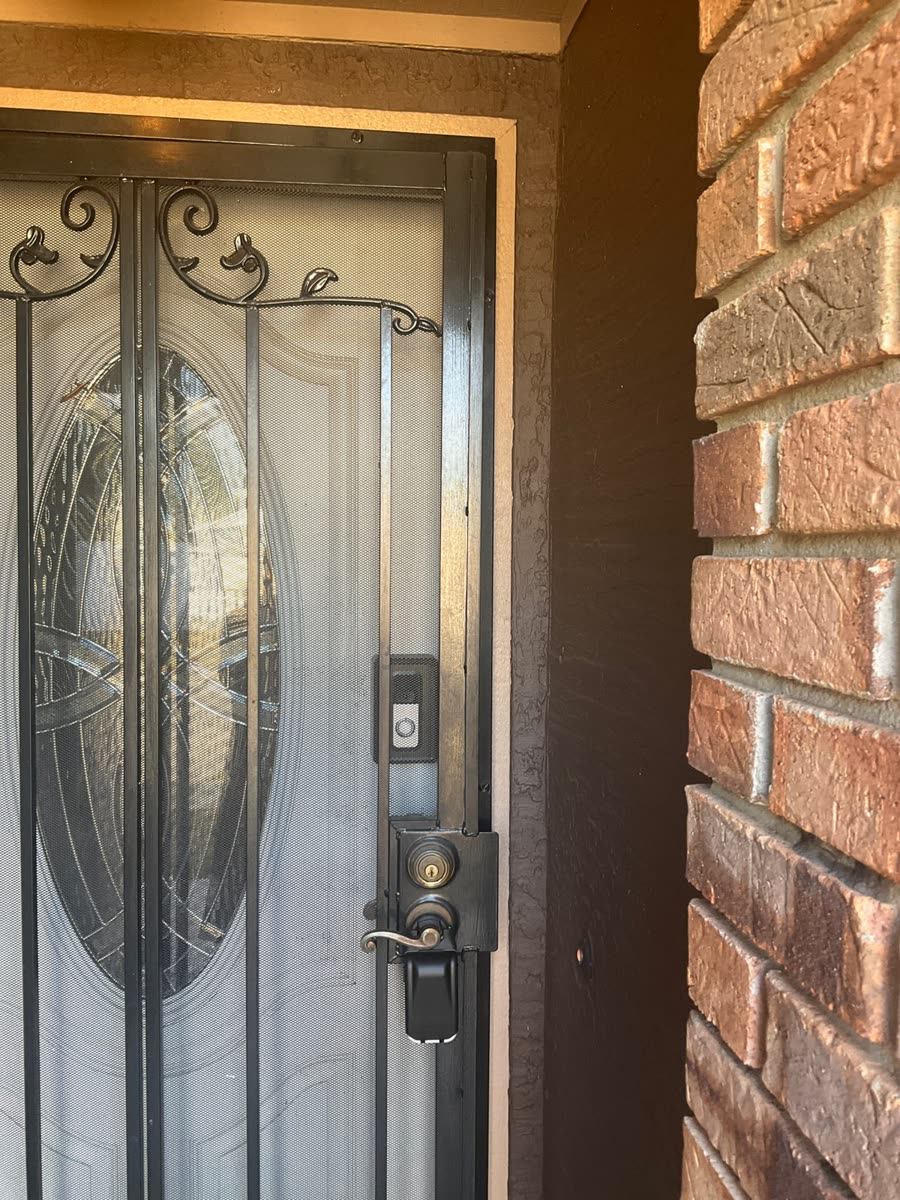
DIYrr builds a personalized plan from a photo and description — tools, materials with local prices, and permit guidance. Email it to yourself to keep it. Free for homeowners, no account needed.
Frequently asked questions
Do I need a permit for a storm door replacement in Orange County, FL?
Not on any published list; ask. Orange County's guide says a replacement exterior door needs a building permit, but it has no storm-door entry: a storm door screws to the brick mold and leaves the entry door, its frame and its Product Approval in place. For work the guide does not name, the county's own advice is to ask before starting: Orange County Building Safety, 407-836-5550, or the city office inside Orlando, Winter Garden, Ocoee or Apopka.
What's the biggest safety risk to know about before a storm door replacement?
Florida sun: the guide's own warning is that 'Entry door hardware and handle may become hot when exposed to sunlight', and heat trapped between a full-view glass storm door and a dark entry door on a west- or south-facing wall is the common cause of warped doors and blistered paint.
Are there specific building-code requirements for a storm door replacement?
Permit: Orange County's guide says a replacement exterior door needs a permit, but it has no storm-door entry, and a storm door screws to the brick mold and leaves the entry door, its frame and its Product Approval untouched. (see the exterior door guide)
Did this guide help?
Looking for a different repair?
Related repairs
- Exterior Door & Weatherstripping repair in Orlando, FL →
- Hurricane Shutters & Window Protection in Orlando, FL →
- Interior Door Adjustment repair in Orlando, FL →
- Interior Door Replacement in Orlando, FL →
- Rekey & Replace Door Locks repair in Orlando, FL →
- Sliding Glass Door repair in Orlando, FL →
Sources
https://images.thdstatic.com/catalog/pdfImages/04/044c7543-3050-4f2c-ae2c-224397906706.pdf
https://images.homedepot-static.com/catalog/pdfImages/25/25caedd6-3233-44a4-840f-b299a8338b01.pdf
https://www.orangecountyfl.net/PermitsLicenses/DoINeedaPermit.aspx
https://engageorange.ocfl.net/fast-track-permitting-services/faqs
This guide is general informational content, not professional or legal advice. Codes and county rules change — confirm permit requirements with your local building department, and use a licensed professional for electrical, gas, structural, or main-line plumbing work.
© 2026 Karhan Companies LLC · Orlando, FL · DIYrr app · All guides · Tips library · About · Contact · Privacy · Terms