Door Sticking or Sagging? One Long Hinge Screw, Not a Plane
Updated 2026-10-21 · Sources verified 2026-07-20
Latch misses strike: smear chalk/lipstick on the latch bolt and close the door to mark the contact point (Schlage's method). Permit in Orange County: no permit. Planing, shimming, or re-hanging an interior door is commonly treated as exempt finish work under FBC 105.2's painting/cabinets/similar-finish-work class, and Orange County publishes no contrary answer. The full answer and its source are below, with the code requirements and mistakes that trip up Orlando homeowners.
Key facts before you start
- Sagging door: before any planing, replace the two TOP-hinge screws nearest the weatherstrip/jamb edge with #10 x 2-1/2" screws driven through the hinge into the wall stud (fastener-maker SPAX's entry-door tip: anchors the frame and prevents sagging). Cheap first fix for a door that rubs at the top latch corner.
- Latch misses strike: smear chalk/lipstick on the latch bolt and close the door to mark the contact point (Schlage's method). If the bolt only rubs one or two sides of the strike, adjust the strike plate (Schlage links a raise/lower guide for bigger misalignment). Chisel the bolt hole until it is a full 1" deep so the bolt extends fully without dragging.
- Order of operations: tighten/long-screw hinges, then shim or file strike, and only plane as a last resort — Masonite's warranty treats up to 1/4" of warp and seasonal expansion/contraction as 'normal, not a defect,' so wood removal for a seasonal stick is usually the wrong fix.
- Trim limits are by door TYPE (Masonite support FAQ): MOLDED-PANEL & FLUSH doors allow only 1/8" per edge incl. the bottom; WOOD-PANEL, MDF & FRENCH doors allow 1/4" per side and 1" off the bottom. NEVER trim the top. Masonite's own interior-door install notes are stricter (max 1/8" per side, no more than 1/4" off the bottom unless blocked) — when unsure use the stricter. Trim sides equally, or the hinge side then re-machine the hinge pockets.
- After any trim or plane, reseal: Masonite requires ALL SIX edges (top, bottom, sides) sealed with at least 2 coats of paint, varnish or lacquer to prevent warping, twisting and checking — primer does not function as a sealer or moisture barrier.
- Seasonal sticking is not a defect: Masonite's warranty calls slight expansion/contraction from changing conditions "normal," says doors may warp until conditioned to the building's humidity (its recommended storage range is 25-55% RH, 50-90F), and may defer warp claims up to 12 months. Prefer sealing edges and adjusting hinges/strike over removing wood from a door that sticks only in humid months.
The permit answer
Source: https://codes.iccsafe.org/s/FLBC2023P1/chapter-1-scope-and-administration/FLBC2023P1-Ch01-SubCh02-Sec105.2
Orange County and the City of Orlando run separate permit offices with separate portals — and your mailing address alone doesn't tell you which one covers your home. Check which permit office covers your address →
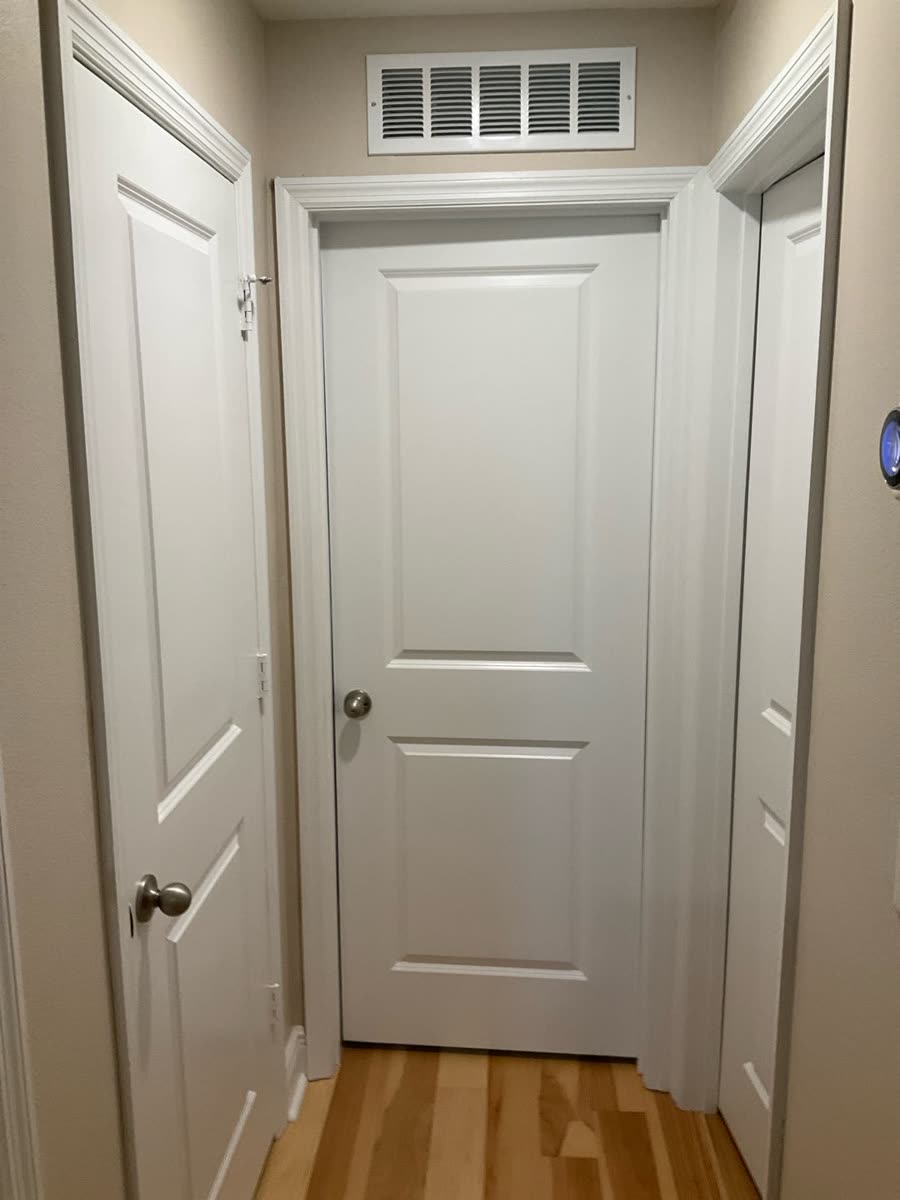
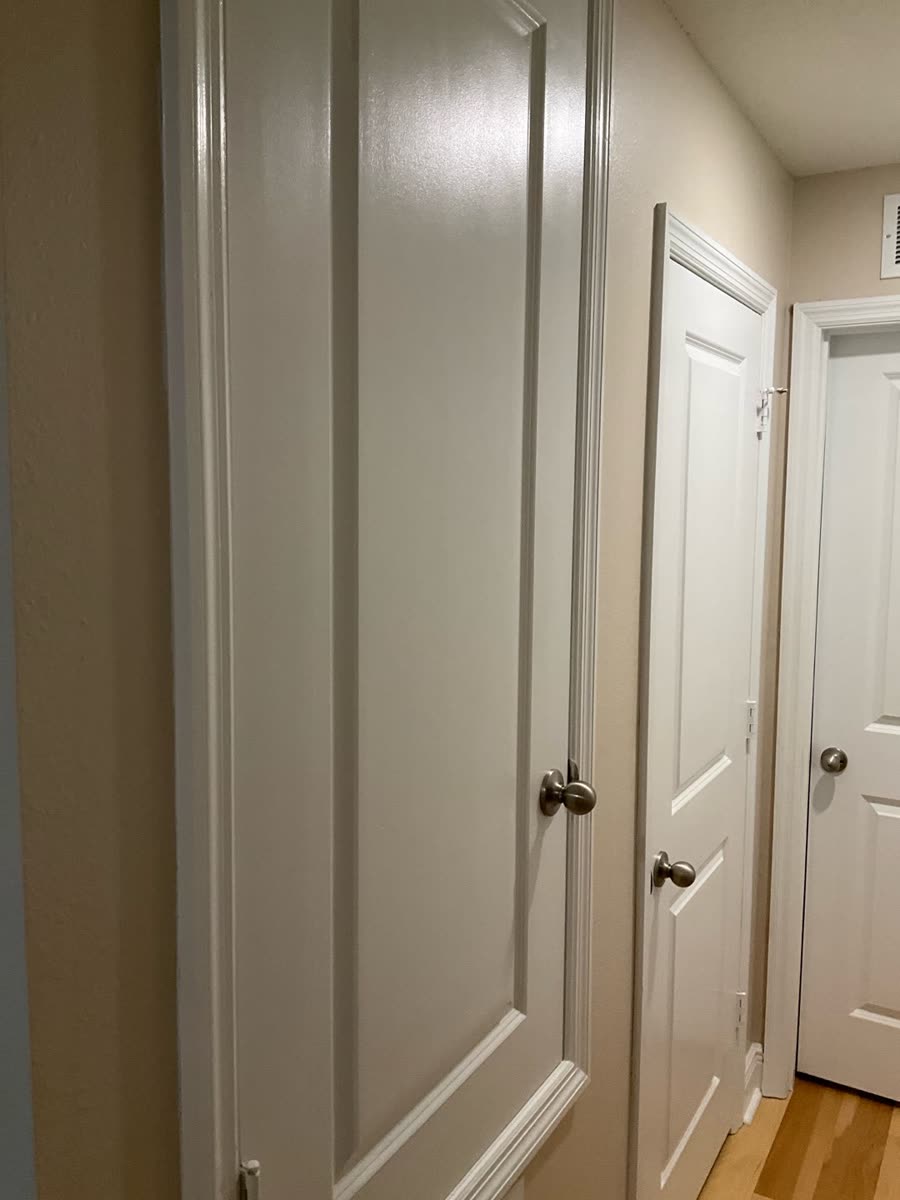
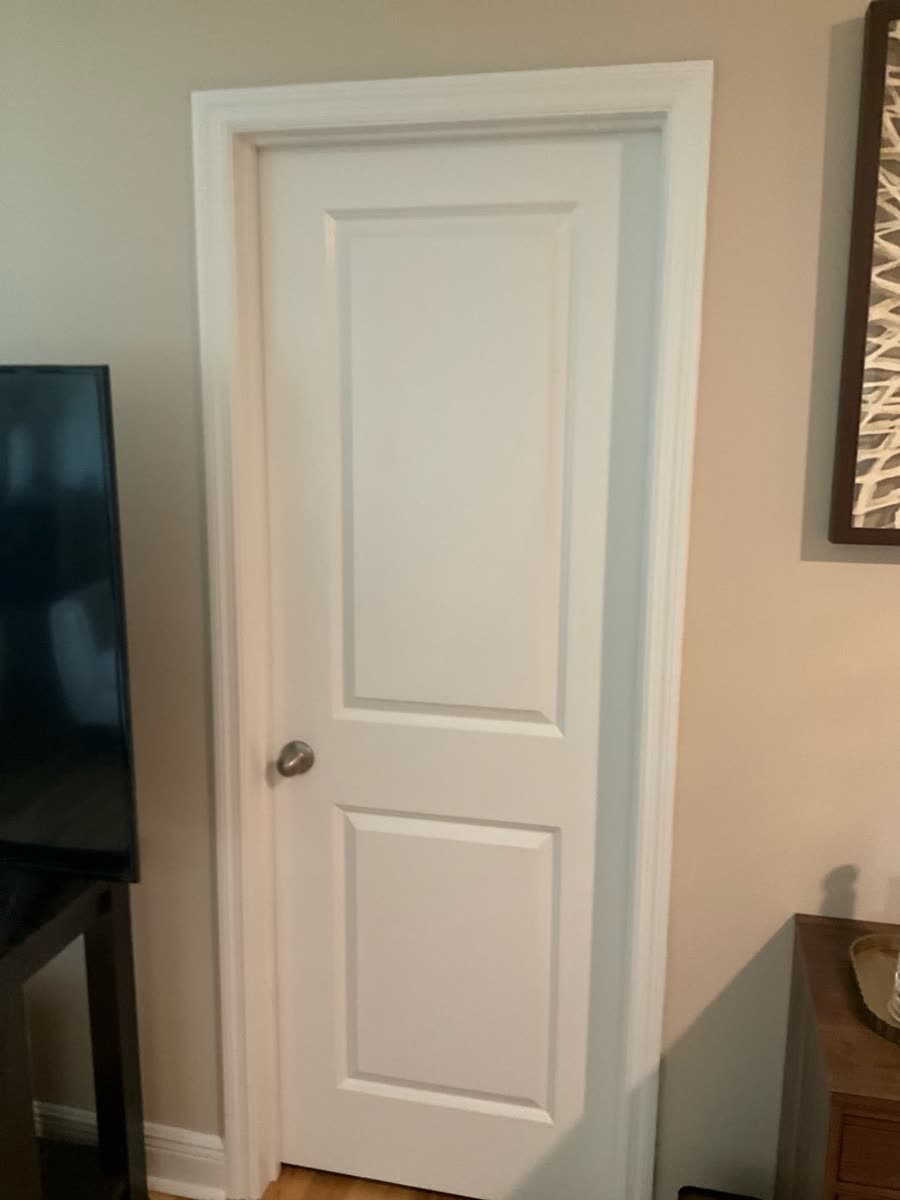
Interior Door Adjustment: what it looks like
Manufacturer instructions
The manufacturers' own instructions this guide is built from. Follow the manual for your exact model; they open on the manufacturer's site.
- Masonite: Residential door support and resources →
- Schlage: How to fix a door that won’t latch →
- SPAX: Entry door hinge screws →
What it costs
Hiring it out: $100–$300 for a typical interior door repair; handyman/door pros charge $38–$80 per hour
Overall door repair averages $132–$372 (~$239 typical); major frame alterations can reach $700+
Published national figures (HomeGuide, checked Aug 2026): https://homeguide.com/costs/door-repair-cost. Prices move — the free planner pulls current retail prices for your exact repair.
DIYrr builds a personalized plan from a photo and description — tools, materials with local prices, and permit guidance. Email it to yourself to keep it. Free for homeowners, no account needed.
Frequently asked questions
Do I need a permit for an interior door adjustment repair in Orange County, FL?
No permit. Planing, shimming, or re-hanging an interior door is commonly treated as exempt finish work under FBC 105.2's painting/cabinets/similar-finish-work class, and Orange County publishes no contrary answer. Exempt work must still comply with the code. Replacing an EXTERIOR door is a different answer: the county's guide says a building permit is required — don't assume the new under-$7,500 exemption applies without the county's written sign-off.
What does an interior door adjustment repair cost?
DIY: $5–$20 in parts for a basic hinge swap; simple fixes like tightening loose hinges start around $50 even hired out Hiring it out: $100–$300 for a typical interior door repair; handyman/door pros charge $38–$80 per hour Overall door repair averages $132–$372 (~$239 typical); major frame alterations can reach $700+ Published national figures (HomeGuide, checked Aug 2026) — local prices vary, and the free DIYrr planner pulls current retail prices for your exact repair.
Did this guide help?
Looking for a different repair?
Related repairs
- Door Latch & Strike Plate Adjustment repair in Orlando, FL →
- Exterior Door & Weatherstripping repair in Orlando, FL →
- Hurricane Shutters & Window Protection in Orlando, FL →
- Interior Door Replacement in Orlando, FL →
- Rekey & Replace Door Locks repair in Orlando, FL →
- Sliding Glass Door repair in Orlando, FL →
Sources
https://www.masonite.com/support/
https://images.thdstatic.com/catalog/pdfImages/28/28f1897b-fd26-4ad5-a92d-cc4fccc59086.pdf
https://www.schlage.com/en/blog/product_updates/door-wont-latch.html
https://spax.us/applications/entry-door
This guide is general informational content, not professional or legal advice. Codes and county rules change — confirm permit requirements with your local building department, and use a licensed professional for electrical, gas, structural, or main-line plumbing work.
© 2026 Karhan Companies LLC · Orlando, FL · DIYrr app · All guides · Tips library · About · Contact · Privacy · Terms