Swapping a Light Fixture? Test Every Wire Dead First
Updated 2026-09-30 · Sources verified 2026-07-20
Switch OFF does not mean dead: NCVT-test EVERY conductor in the box before touching (hot, neutral, and switch-leg wires) — Klein NCVT manual: 'Never assume neutral or ground wires are de-energized. Permit in Orange County: yes if new wiring, a new box, or a new circuit is involved. A like-for-like swap at the existing box is the gray area — no device-swap exemption is published, so confirm before assuming; homeowners may self-perform only under the owner-builder exemption on their own residence. The full rule and its official source are below, with the code requirements and mistakes that trip up Orlando homeowners.
Key facts before you start
- Switch OFF does not mean dead: NCVT-test EVERY conductor in the box before touching (hot, neutral, and switch-leg wires) — Klein NCVT manual: 'Never assume neutral or ground wires are de-energized. Neutrals in multi-wire branch circuits may be energized when disconnected'; verify tester on a known-live circuit first, and no beep still does not guarantee dead ('If no indication, voltage could still be present').
- Wire nuts per Ideal Wing-Nut instructions: pre-twisting is 'acceptable, but not required'; strip to model spec (451 = 3/8 in solid, 452 = 1/2 in); lead the fixture's STRANDED wire slightly ahead of the solid house wire, insert bundle, twist clockwise until tight; connector must be sized to the wire combo; Cu-to-Cu and dry locations only.
- Box limits (NEC 314.27): a standard ceiling outlet box supports a max 50 lb luminaire — anything heavier (large chandeliers) must be supported independently of the box unless the box is listed/marked for the weight; and when the box is metal, attach the equipment ground to it with a dedicated grounding screw or listed device so ground continuity survives fixture removal (NEC 250.148).
- Location listing (NEC 410.10): covered porch/exterior soffit = DAMP location (fixture must be marked 'Suitable for Damp Locations' or wet); anything exposed to weather or direct spray = WET ('Suitable for Wet Locations'). Bath: no pendants, cord/chain-hung fixtures, or track within 3 ft horizontally / 8 ft vertically of the tub rim or shower threshold; fixtures within the tub/shower footprint up to 8 ft above the rim/threshold must be damp-rated (wet-rated if subject to shower spray).
- Swapping trim/lamps on older recessed cans: non-Type-IC housings require attic insulation kept >=3 in away and NONE above the housing (NEC 410.116(B)); only Type IC housings may touch insulation. A light that cycles on/off after the swap is the can's thermal protector tripping from overheating (over-lamping or insulation contact), not a bad bulb.
- Orlando/Orange County FL: a true like-for-like fixture swap at an existing outlet is a permit gray area — county code (Sec. 9-86(a)) requires an electrical permit to 'make any extensions or changes to existing systems of wiring for light, heat, or power', and the county's Do-I-Need-a-Permit page does not exempt fixture swaps; keep the check_local flag, note homeowners may self-perform only under the owner-builder exemption (F.S. 489.103(7)(a)) on their own residence.
The permit answer
Source: https://www.orangecountyfl.net/PermitsLicenses/DivisionOfBuildingSafety.aspx
Orange County and the City of Orlando run separate permit offices with separate portals — and your mailing address alone doesn't tell you which one covers your home. Check which permit office covers your address →
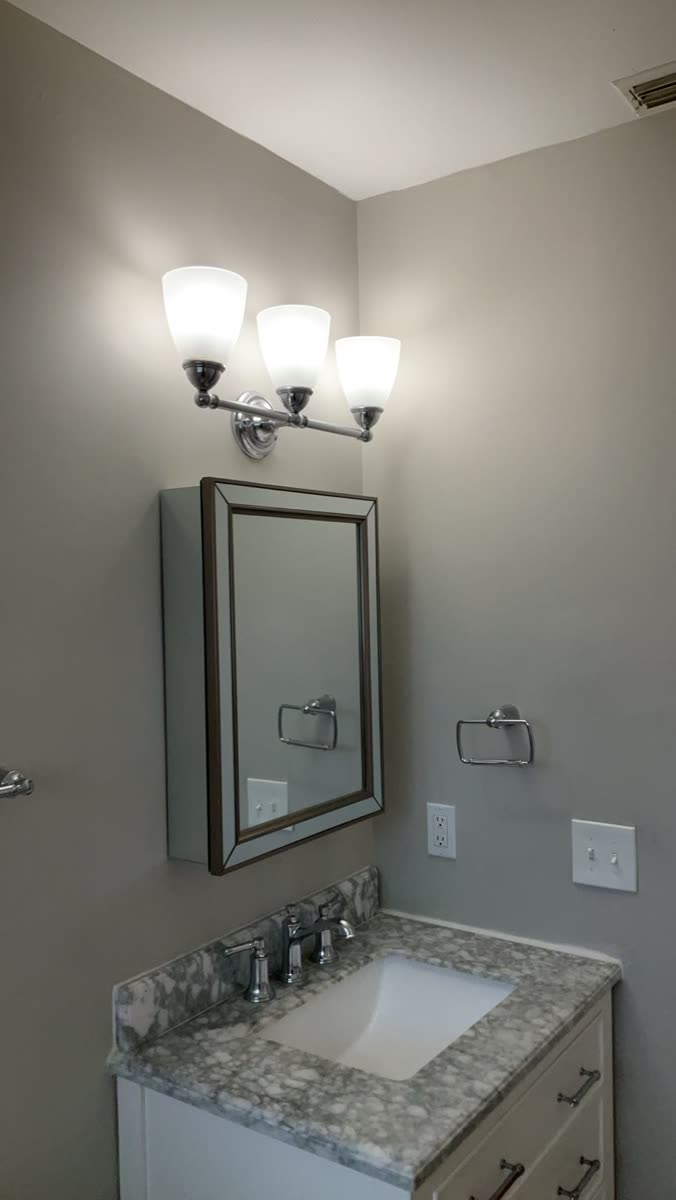
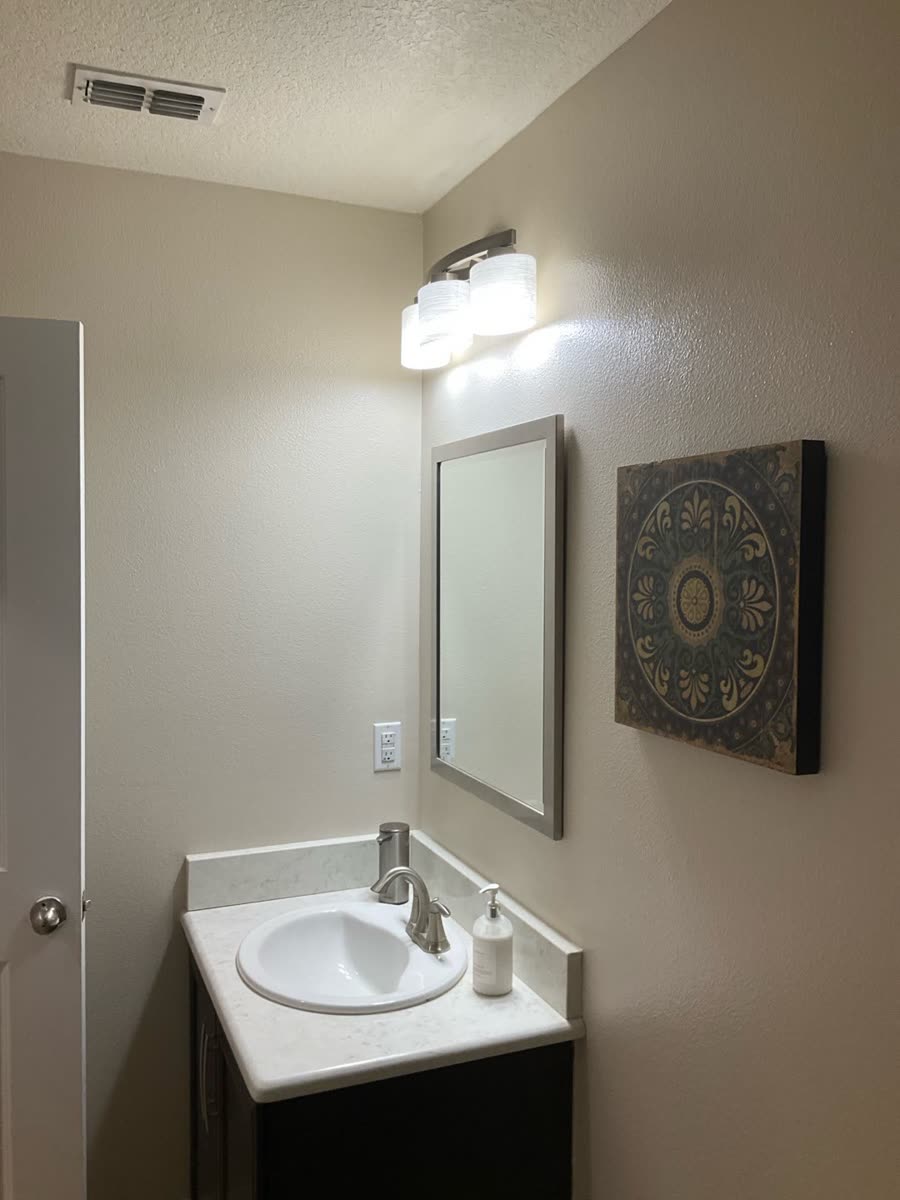
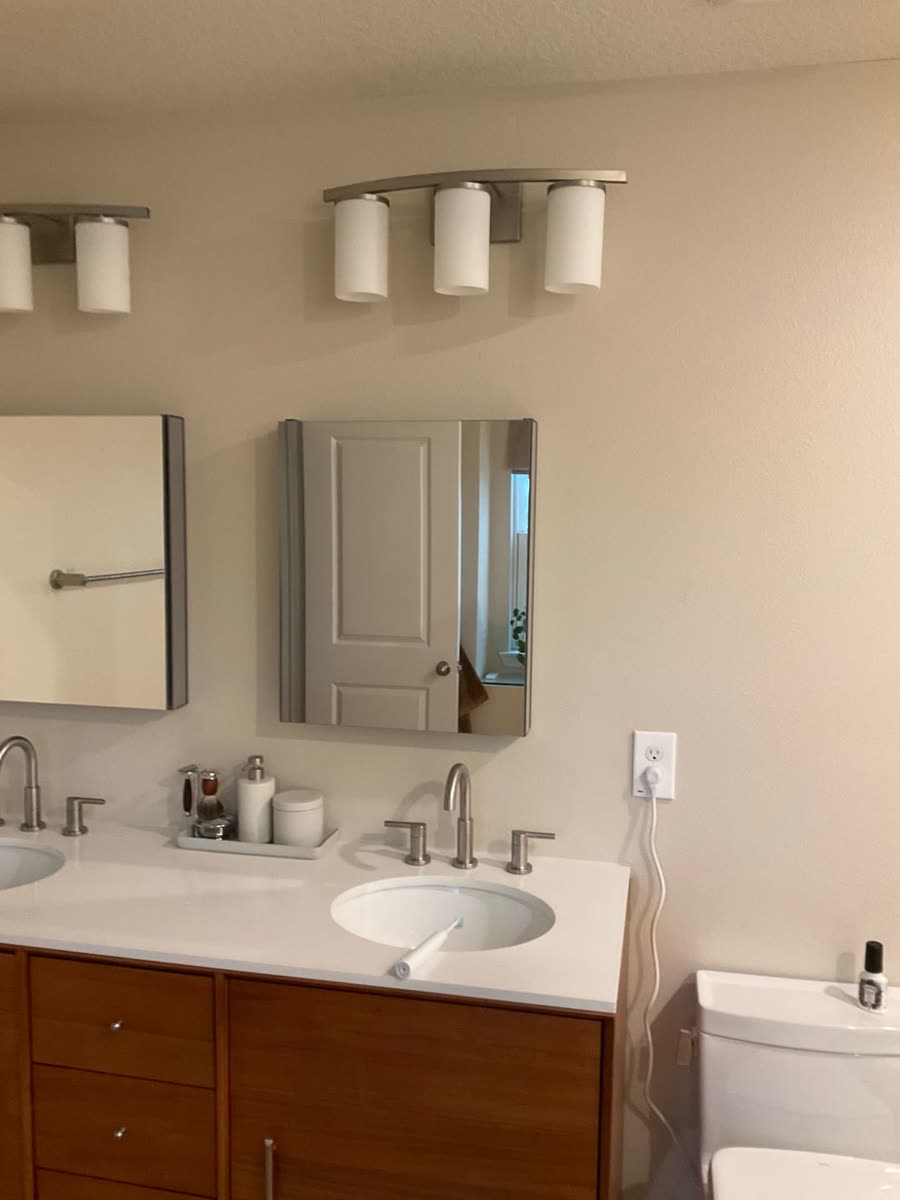
Light Fixture Swap: what it looks like
Manufacturer instructions
The manufacturers' own instructions this guide is built from. Follow the manual for your exact model; they open on the manufacturer's site.
Get a free step-by-step plan for YOUR exact repair →DIYrr builds a personalized plan from a photo and description — tools, materials with local prices, and permit guidance. Email it to yourself to keep it. Free for homeowners, no account needed.
Frequently asked questions
Do I need a permit for a light fixture swap in Orange County, FL?
Check with your building department. FBC exempts only 'minor repair' (lamps, cord-and-plug), and Orange County publishes no device-swap exemption: its no-permit list is closed ('limited to minor repairs such as' painting, floor covering, same-location cabinets/countertops, landscaping) with no electrical entry, while OC Code of Ordinances 9-86(a) requires an electrical permit 'to install any electrical wiring, apparatus, or equipment, or to make any extensions or changes to existing systems of wiring for light, heat, or power.' A NEW box, new wiring, or a new circuit for any of these devices = permit required, and HB 803's under-$7,500 exemption never covers electrical at any value.
Are there specific building-code requirements for a light fixture swap?
Box limits (NEC 314.27): a standard ceiling outlet box supports a max 50 lb luminaire anything heavier (large chandeliers) must be supported independently of the box unless the box is listed/marked for the weight. (NEC 250.148)
Did this guide help?
Looking for a different repair?
Related repairs
- Breaker Keeps Tripping repair in Orlando, FL →
- Ceiling Fan repair in Orlando, FL →
- Doorbell & Video Doorbell repair in Orlando, FL →
- Flickering Lights / Low Water Pressure in Orlando, FL →
- Generator Hookup & Transfer Switch in Orlando, FL →
- GFCI Outlet repair in Orlando, FL →
Sources
https://data.kleintools.com/sites/all/product_assets/documents/instructions/klein/NCVT2_Instructions.pdf
https://www.mainelectricsupply.com/customer/docs/skudocs/ideal-30-452j-installation-sheet-8.pdf
https://p1.aprimocdn.net/idealindustries/aa31fff7-51f1-423a-8cc4-b43400faf83e/ied-web_product-assets_wire-connectors_twist-on_instructions_Wing-Nut-Wire-Connector-Installation-Instructions_Original%20file.pdf
https://up.codes/s/boxes-at-luminaire-or-lampholder-outlets
https://up.codes/s/continuity-of-equipment-grounding-conductors-and-attachment-in-boxes
https://up.codes/s/clearance-and-installation
https://hew.com/specifications/environmental-conditions.pdf
https://www.orangecountyfl.net/PermitsLicenses/DoINeedaPermit.aspx
https://www.orangecountyfl.net/PermitsLicenses/Permits/ElectricalPermit.aspx
https://www.orangecountyfl.net/PermitsLicenses/DivisionOfBuildingSafety.aspx
This guide is general informational content, not professional or legal advice. Codes and county rules change — confirm permit requirements with your local building department, and use a licensed professional for electrical, gas, structural, or main-line plumbing work.
© 2026 Karhan Companies LLC · Orlando, FL · DIYrr app · All guides · Tips library · About · Contact · Privacy · Terms