Hardie Board Repair: the Clearances That Keep the Warranty
Updated 2026-11-11 · Sources verified 2026-07-20
Blind-nailing is JH's preferred method and must NOT be mixed with face-nailing on the same wall (face-nail only where code requires it for high wind; a repair exemption is in JH Tech Bulletin 17). Permit in Orange County: depends on the scale. Replacing a few damaged boards like-for-like is repair. The full answer and its source are below, with the code requirements and mistakes that trip up Orlando homeowners.
Key facts before you start
- James Hardie's HZ10 line is engineered for the hurricane winds, coastal salt air, and humid Southern heat that fit Central FL - but JH's own instructions tell you to CONFIRM the correct HardieZone at HardieZone.com before ordering and warn that failing to follow the written instructions 'may affect warranty coverage.' The board carries State of Florida Product Approval FL#13192 outside the HVHZ (Miami-Dade/Broward HVHZ jobs instead follow Miami-Dade NOA 20-0730.06), and the approved install details must be on the jobsite, not improvised. (James Hardie HardiePlank FL#13192)
- Blind-nailing is JH's preferred method and must NOT be mixed with face-nailing on the same wall (face-nail only where code requires it for high wind; a repair exemption is in JH Tech Bulletin 17). Blind-nail schedule over wood framing: a siding nail 0.09 in. shank x 0.221 in. HD x 2 in. long, OR an 11-ga roofing nail (0.121 x 0.371 HD x 1.25 in.), driven at the nail line (no line: 3/4-1 in. down from the plank top) and 3/8 in. from the plank edge; over min 7/16 in. OSB the blind siding nail is 0.09 x 0.215 HD x 1-1/2 in. Keep min 1-1/4 in. plank overlap and studs max 24 in. o.c. (James Hardie HardiePlank FL#13192)
- Fasteners must be corrosion-resistant galvanized or stainless - JH recommends hot-dipped galvanized and recommends stainless steel 'when installing James Hardie products near the ocean, large bodies of water, or in very humid climates' (which fits humid Central FL and lakeside lots); electro-galvanized is only 'acceptable but may exhibit premature corrosion.' Aluminum fasteners, staples, and clipped-head nails are prohibited. 'Fastener heads should fit snug against siding (no air space).' JH's fastener chart marks slanted nails and countersink-and-fill as DO NOT; an overdriven nail gets an additional nail, not filler. If a pneumatic gun won't set consistently, JH says 'choose a setting that under drives the nail' and finish it 'snug with a smooth faced hammer.' HIT THE STUD: 'Whenever a structural member is present, HardiePlank should be fastened with even spacing to the structural member,' and the direct-to-OSB/plywood tables 'should only be used when traditional framing is not available' - fastening to sheathing because it is easier is a downgrade, not an option. (James Hardie HardiePlank FL#13192)
- Water management is the whole game on a humid, termite-max FL wall: hold JH's minimum clearances - 6 in. siding-to-finished-grade, 1 in. above roofs/decks/paths/steps and gutters, 1/2 in. off masonry/mortar, and 1/4 in. at horizontal flashing and block penetrations (with Z-flashing, do NOT caulk those). Grade must slope away >=6 in. over the first 10 ft, and siding may never sit in standing water. A code-required water-resistive barrier goes behind the siding; at butt joints set planks in 'moderate contact' over metal joint flashing (JH-preferred, per 2018 IRC R703.10.2); seal every field-cut edge; and store planks flat and DRY - wet siding shrinks and opens the butt joints. (James Hardie HardiePlank FL#13192)
- Cutting fiber-cement releases respirable crystalline silica (a Prop 65 carcinogen). OSHA's PEL is 50 ug/m3 as an 8-hr TWA (25 ug/m3 action level); its Table 1 provision for handheld power saws cutting fiber-cement board (blade <=8 in.) is OUTDOOR-USE-ONLY paired with a commercially available dust-collection system (>=99% filter efficiency) - meet that and no respirator is required for any shift length. So position the saw so airflow carries dust away, use a HardieBlade + vacuum, NEVER power-saw or dry-cut indoors (use shears or score-and-snap), and never dry-sweep the dust - vacuum or wet-clean, N-95 minimum if no other control. (OSHA 1926.1153)
- Permit: Orange County's Alterations/Renovations/Repairs page sets permit requirements for BOTH categories - 'repair' is 'the reconstruction or renewal of any part of an existing building for the purpose of its maintenance or to correct damage'; an 'alteration' is other construction/renovation - so swapping a board is not automatically permit-free. The page never names siding or a no-permit threshold: confirm your scope with the Division of Building Safety (407-836-5550). If permitted, a passed '290 Final Inspection' closes it, and approved installation details must be on the jobsite or the inspection fails. An owner-occupant can pull an owner-builder permit to DIY; hiring out a permitted re-side means a licensed contractor, not an unlicensed handyman. (Orange County Building Safety)
The permit answer
Source: https://www.orangecountyfl.net/PermitsLicenses/DoINeedaPermit.aspx
Orange County and the City of Orlando run separate permit offices with separate portals — and your mailing address alone doesn't tell you which one covers your home. Check which permit office covers your address →
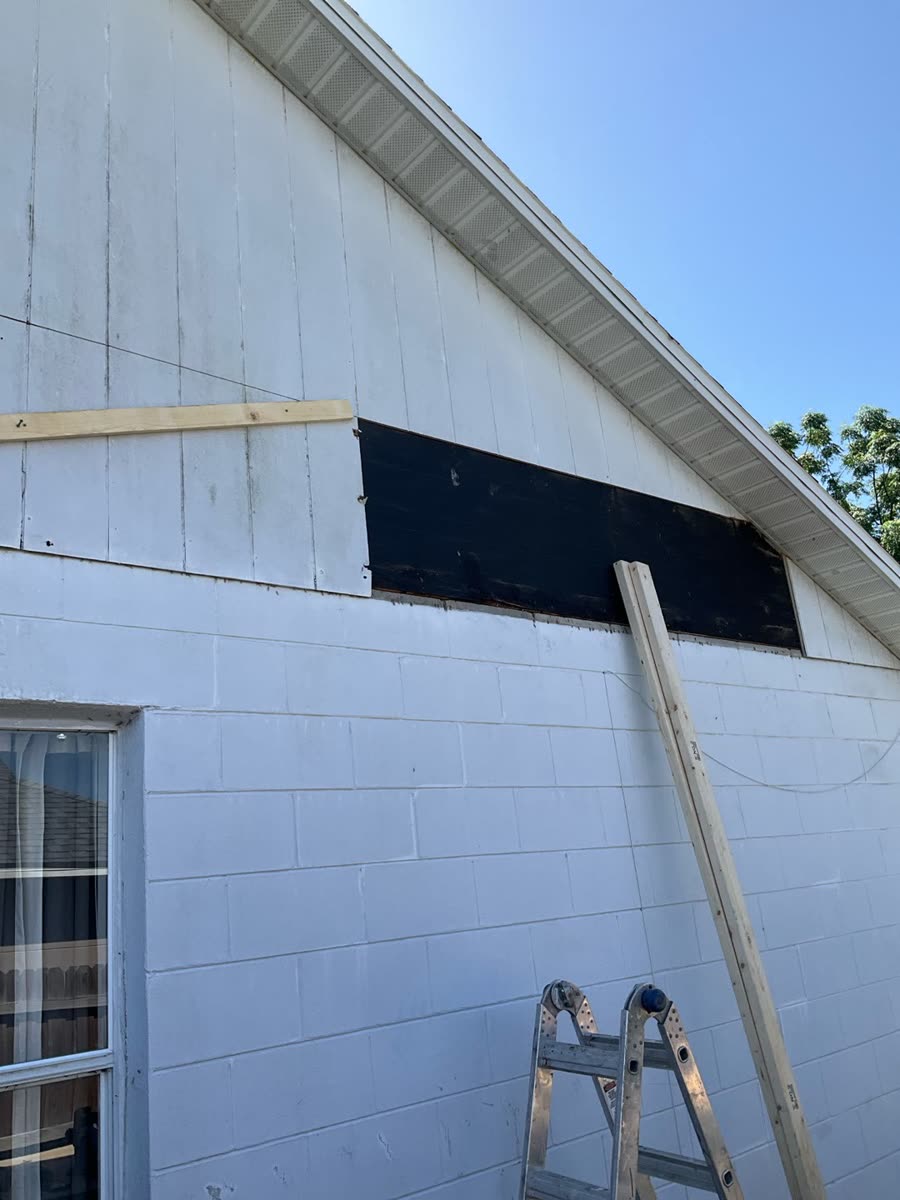
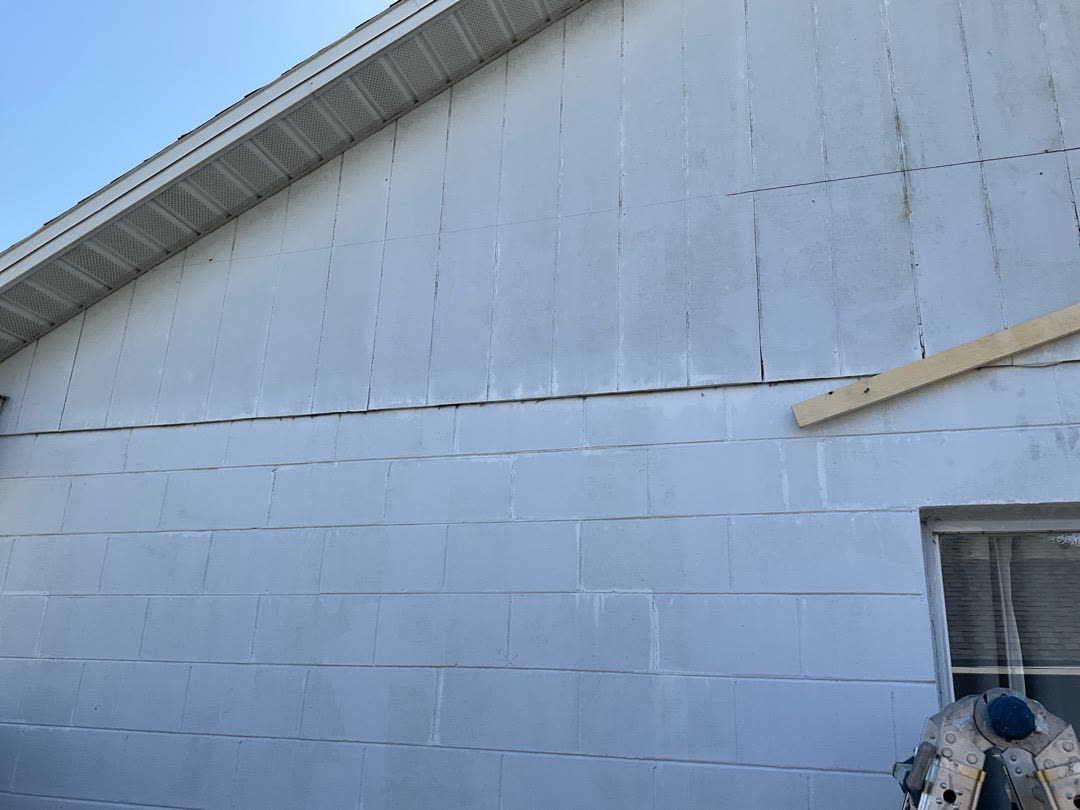
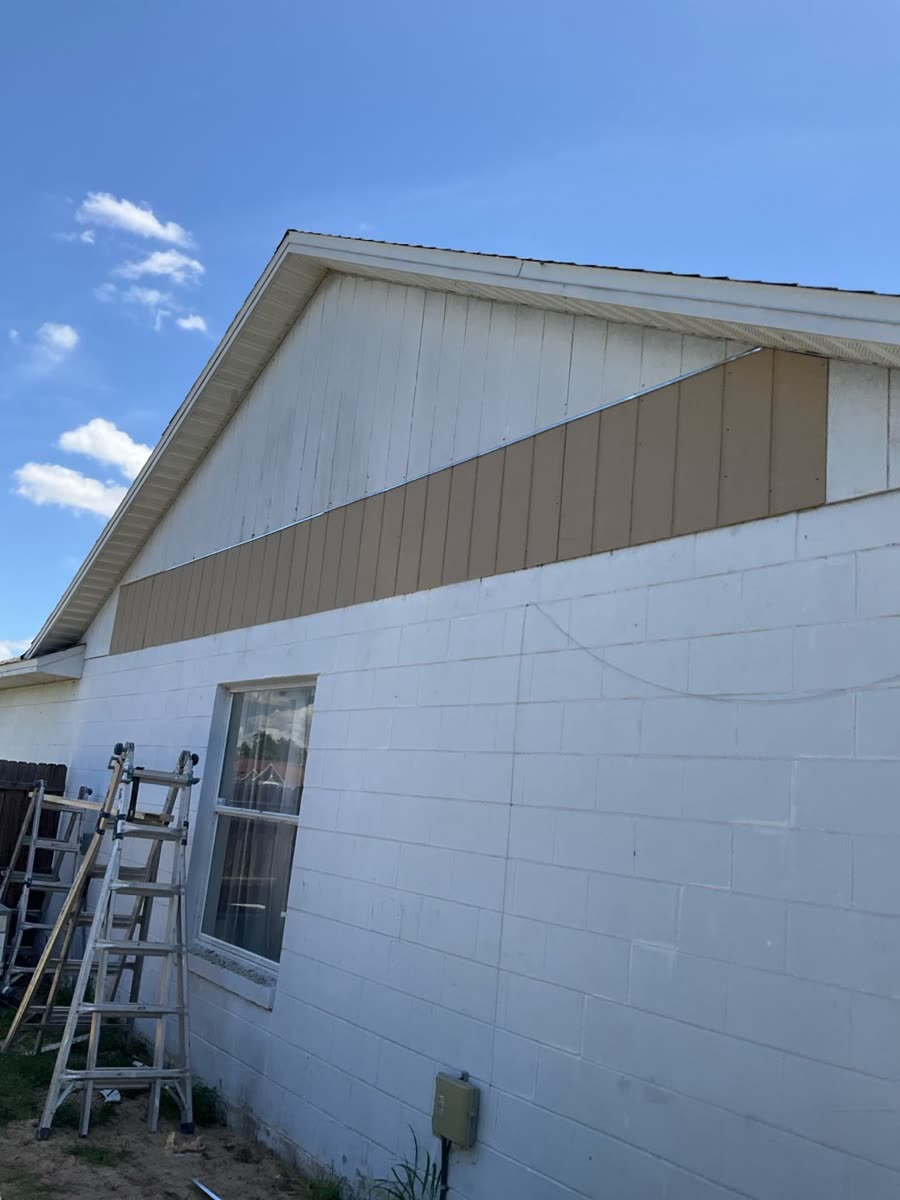
James Hardie / Fiber Cement Siding: what it looks like
Manufacturer instructions
The manufacturers' own instructions this guide is built from. Follow the manual for your exact model; they open on the manufacturer's site.
What it costs
Hiring it out: $150–$300 per section for individual plank replacement (repair); $16–$40 per sq ft installed for full Hardie Board siding ($19,200–$84,000 whole-house)
Installed price includes old-siding tear-off and prep; removing existing siding alone is $1–$4+ per sq ft.
Published national figures (HomeGuide, checked Aug 2026): https://homeguide.com/costs/hardie-board-siding-cost. Prices move — the free planner pulls current retail prices for your exact repair.
DIYrr builds a personalized plan from a photo and description — tools, materials with local prices, and permit guidance. Email it to yourself to keep it. Free for homeowners, no account needed.
Frequently asked questions
Do I need a permit for a James Hardie / fiber cement siding repair in Orange County, FL?
Depends on the scale. Replacing a few damaged boards like-for-like is repair. Re-siding a wall or the house is an exterior alteration — Orange County's guide says additions and alterations require a building permit — and rot discovered underneath moves the job into structural territory.
Are there specific building-code requirements for a James Hardie / fiber cement siding repair?
Blind-nailing is JH's preferred method and must NOT be mixed with face-nailing on the same wall (face-nail only where code requires it for high wind; a repair exemption is in JH Tech Bulletin 17). (James Hardie HardiePlank FL#13192)
What does a James Hardie / fiber cement siding repair cost?
DIY: Not a typical DIY material (heavy planks, special cutting tools); no DIY parts figure published by the source Hiring it out: $150–$300 per section for individual plank replacement (repair); $16–$40 per sq ft installed for full Hardie Board siding ($19,200–$84,000 whole-house) Installed price includes old-siding tear-off and prep; removing existing siding alone is $1–$4+ per sq ft. Published national figures (HomeGuide, checked Aug 2026) — local prices vary, and the free DIYrr planner pulls current retail prices for your exact repair.
Did this guide help?
Looking for a different repair?
Related repairs
- Attic Insulation repair in Orlando, FL →
- Attic Ladder / Access in Orlando, FL →
- Concrete Walkway / Sidewalk repair in Orlando, FL →
- Deck Board Replacement in Orlando, FL →
- Emergency Roof Tarp in Orlando, FL →
- Exterior Stucco Patch repair in Orlando, FL →
Sources
https://www.floridabuilding.org/upload/PR_Instl_Docs/FL13192_R6_II_HardiePlank-Install-Instr_.pdf
https://www.osha.gov/laws-regs/regulations/standardnumber/1926/1926.1153
https://www.jameshardie.com/hardie-zone-system/
https://www.orangecountyfl.net/PermitsLicenses/Permits/AlterationsRenovationsRepairs.aspx
This guide is general informational content, not professional or legal advice. Codes and county rules change — confirm permit requirements with your local building department, and use a licensed professional for electrical, gas, structural, or main-line plumbing work.
© 2026 Karhan Companies LLC · Orlando, FL · DIYrr app · All guides · Tips library · About · Contact · Privacy · Terms